URGENT UPDATE – scroll down Barwon Water Survey needs to be completed before 27 July
CURRENT SITUATION
URGENT UPDATE 9th July 2025
Barwon Water intends to demolish the Aqueduct. The intention is to replace it with an Aqueduct heritage interpretation strategy describing what used to be there.
Proposing a Heritage Interpretation Plan is an inadequate and inappropriate substitute for genuine conservation. An interpretation plan is being used as an alternative, and is a superficial effort to address heritage concerns without actually implementing meaningful conservation measures. It shouldn’t be a replacement for actual preservation efforts like retention or protection. A plan that focuses solely on interpretation, without addressing the underlying needs for conservation, is ultimately insufficient.
From Finest Reinforced Concrete Construction to Historic Ruin
In 100 Years- The Barwon Ovoid Sewer Aqueduct, David Beauchamp, B.E. MICE, MIE Aust. (retired) Deputy Chair Engineering Heritage Victoria
ABSTRACT
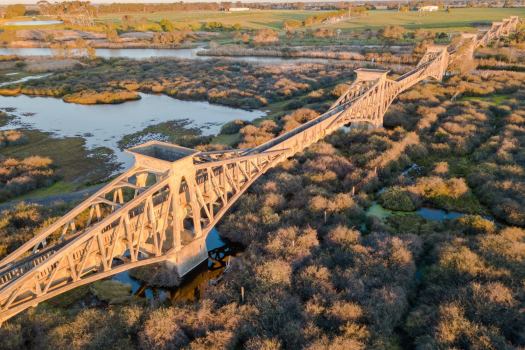
The Barwon Ovoid Sewer Aqueduct is an impressive structure 756m long spanning across the Barwon River and its flood plain at Breakwater, Geelong. Constructed between 1913 and 1915 as part of Geelong’s first sewerage scheme, it carried the ovoid main sewer towards the ocean outfall at Black Rock. At the time of its construction it was described in the English Concrete & Constructional Engineering Journal as ‘one of the finest reinforced concrete constructions in Australia’.
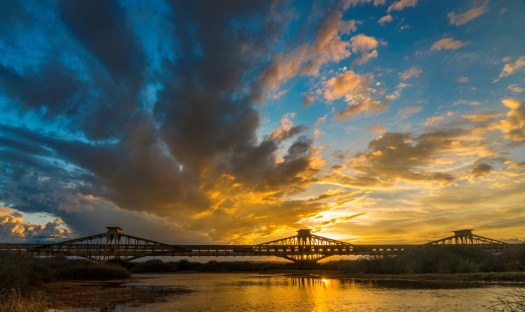
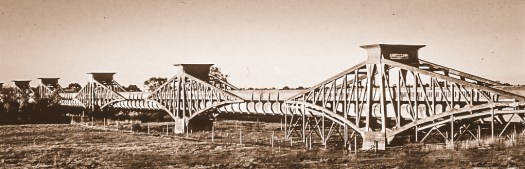
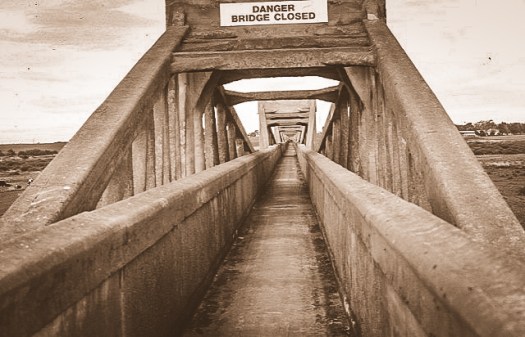
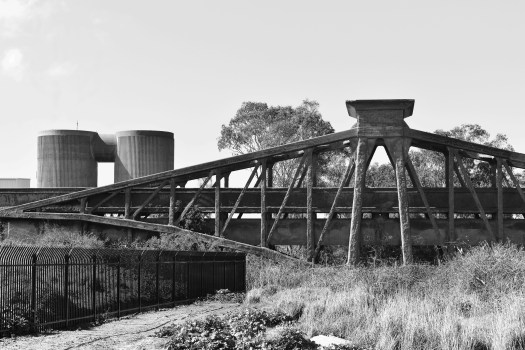
The aqueduct designed by E.G. Stone consists of 14 piers that support parallel pairs of balanced cantilever trusses, which in turn, support the maintenance walkway and the ovoid sewer pipe slung below the walkway. Each cantilever truss extends 20.73m from the piers with; except in one case; a 12.2 m gap between the ends of the trusses that is spanned by the walkway and the ovoid sewer pipe. The form of the aqueduct is similar to the 1890 steel Firth of Forth Bridge. Today the aqueduct is no longer in use; it is derelict and fenced off to prevent the possibility of spalling concrete hitting anyone walking or boating under it. Since its decommissioning in early 1993 there has been ongoing debate about its future.
Source: Facebook – Geelong in Historical Pictures
The aqueduct is an important part of Geelong’s heritage, the only visible sign of the early 20th century provision of a sewerage scheme for Geelong. It will form an impressive sight once the floodplain is open to public access. It is one of the few examples left of the use of the Considère system of reinforced concrete. The full historic importance of the aqueduct can be obtained from its listing in the Victorian Heritage Register.
As much of the aqueduct, as possible, should be retained and allowed to slowly collapse. The aqueduct is not a simple structure & collapse of one member is unlikely to cause the collapse of all of the structure. Despite numerous predictions that failure of the aqueduct was imminent it is still standing.
To prevent public access to the aqueduct and prevent any danger from spalling concrete or collapse of any part of the aqueduct it should be securely fenced off & access along the walkway prevented. Since at least 2017 there has been fencing either side of the aqueduct to prevent access. There have been no reports of anyone being hurt by falling concrete. Fencing around the aqueduct is part of the present Heritage Victoria permit to demolish four spans.
There is an alternative to demolition
Establish a safe setting, by providing a public exclusion zone and enabling the public to view the structure from a safe distance from viewing platforms
Do not dismantle the structure, allow it to ‘grow old gracefully’ as a noble ruin as defined in the document “Ruins – a guide to conservation and management” published by Australian Heritage Council (available on-line)
There are numerous examples of ruins as tourist attractions and educational places
The current public Survey assumes that demolition is the only future for the Aqueduct.
Please complete the Barwon Water public survey and advise Barwon Water that the Aqueduct should not be demolished; it should be retained according to the expertise above.
Have your say! Let Barwon Water know the Aqueduct should not be demolished Click on the link below
The survey page is a bit tricky, scroll down the page then click on the survey tab.
The Aqueduct was designed to carry sewage in an ovoid pipe line, to an ocean outfall at Black Rock. A plant was set up in nearby Marshalltown to construct the pipe. The development was an important response to public health needs in a developing city.
It was decommissioned in 1993 and, having withstood several major floods , it remains a very significant early Australian concrete structure.
Join our dedicated group to assist in preserving our heritage structure and mobilise community support to enable its retention, safe access for the public under it on the water, and around it on a foot and cycle path.
BENEFITS OF MEMBERSHIP * members will be able to express their views about saving the Aqueduct * members can supply information to others who have an interest
MEMBERS INVOLVEMENT * lobby others to enlist help in saving the Aqueduct * spread the word
Membership Cost
$10
will go to supporting us achieve our aims.
Membership Form
Download a copy of the form, deposit your membership subscription and return it to us by email at barwonaqueduct@gmail.com



 Friends of Barwon River Ovoid Sewer Aqueduct